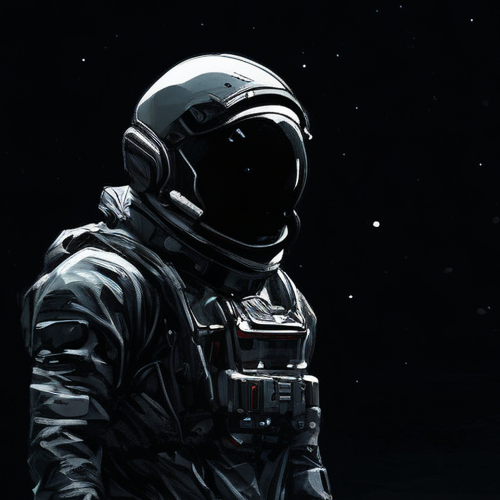

Space was never silent. It hums beneath your thoughts. Breathes between stars. A rhythm older than light, older than fear. But when you’re truly alone… you stop hearing it. The silence becomes you.”
“I was sent across time to glimpse humanity’s future. Instead, I found its grave. Now I drift above a dead Earth, wrapped in a ship without a crew…”
“My name is Elias Solace. Commander of the Erebus… and its last surviving soul.”
Echoes of Discovery
They found it beneath the ice.
Buried under a kilometer of Antarctic sheet, nestled in the bedrock like a fossil waiting to be remembered. At first they thought it was an ancient structure. But when the drills hit alloy instead of rock, everything changed.
The structure didn’t match anything we’d ever seen. Smooth, seamless walls. No rivets. No weld lines. It was cold to the touch but somehow alive — resonating faint pulses of heat every six hours, like a heartbeat.
When we found the door it just… opened.
Inside were chambers filled with impossible machines. Diagrams etched into the walls with microscopic detail. Star charts that didn’t match any known system. The language was all mathematical and deciphering it was a long process.
Eventually, we unlocked the blueprints for a star-ship with plans for a new kind of propulsion system. Engines that allowed Faster than light travel. Gravitational systems that provided safety for the crew during FTL and gravity within the ship itself. Humanity now had the ability to travel the length of the Milky Way galaxy in just weeks.
There was also a warning inside the blueprints that travel to other galaxies even to Andromeda was not recommended. The ship needs gravity to help propel itself through space. The super-black hole in our galactic centre in theory was part of the engine, and if we were to leave the gravitational pull of the Milky Way there was no way to course correct in the vacuum of deep space.
The ones who built the structure referred to themself as “The Builders”. A.I. modeling showed that their star-map was of the Ring galaxy we know of as Hoag’s Object. The Map showed Hoag’s Object as it was at least a million years ago. The question then was how old was the structure on earth and how did they travel beyond their own galaxy.
One chamber was hidden, once opened the room had no diagrams on the walls. In the middle sat a large device. Reverse engineering showed that it could create small worm holes. Scientists were able to create small unstable bubbles that could send inanimate objects from one place to another. But there was a catch: Time.
You could pick the destination. But not when. Each jump was a roll of the dice. Some objects returned warped, aged a thousand years. Others vanished entirely. A few came back newer than when they left.
It was like the device we found was missing a crucial component. Maybe the Builders didn’t want us to follow them, or they only wanted us to find them once we had achieved the ability to make wormholes.
We spent decades refining the equations. The Wormholes grew stable enough to link cities — from Arctic tundra to equatorial spires in seconds. But every time we made them bigger, they grew harder to control. The math got stranger. The fabric of reality started to bend in ways we couldn’t model.
Still… we kept pushing.
The blueprints and gravitational systems allowed us to build fleets of small ships and bases were established on the moon. Within two years humanity was not only living and holidaying on the moon but we were mining the asteroid belt and other planet’s moons in the system.
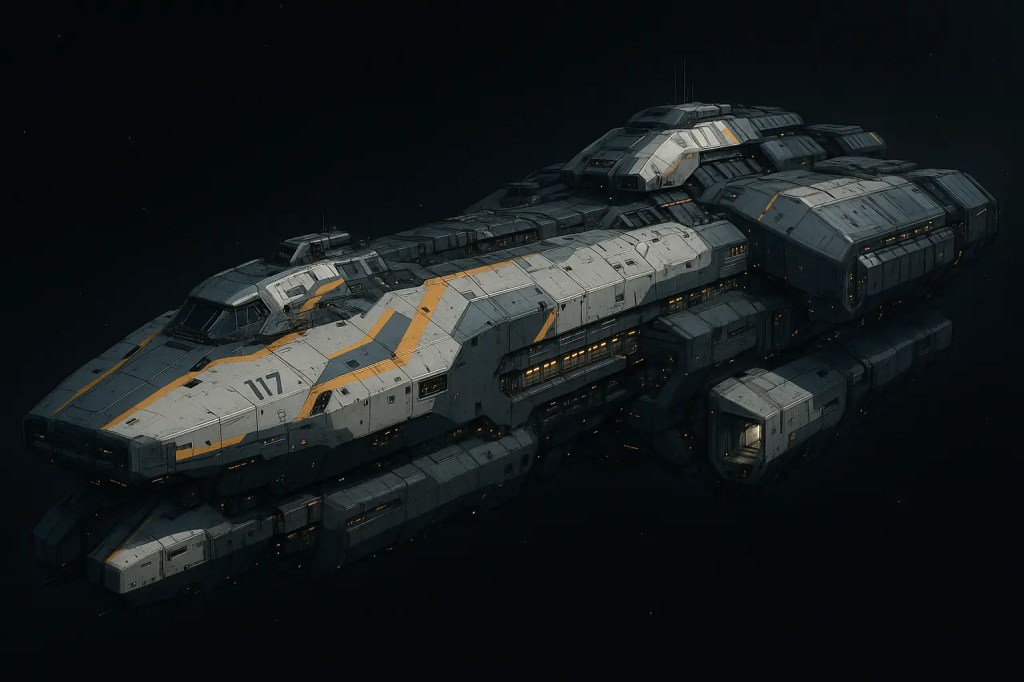
Then came the Erebus. Built from the builders’ blueprints in a massive space dock orbiting the moon. She was humanity’s first attempt to ride the fold into time itself. Not just travel across worlds — but through millennia.
We called the Wormhole propulsion core the Acheron Drive. Spanning five decks of the Erebus, the Acheron Drive is a cathedral-like engine room, vaulted and humming with restrained power. It’s core resembles a floating black torus encased in magnetic scaffolding, constantly rotating and refracting light as if absorbing the laws of physics themselves.
While the Erebus could pilot itself with its onboard A.I. It had room for 120 crew and hundreds more passengers. The ship design was that of an ark. With a realisation that a single ship could be used to colonize a star system.
A crew of 13 were selected to carry out the initial tests of the Erebus. I was selected as Pilot and Captain of the ship. My wife Sophia was the lead scientist on the Erebus project and part of the crew. The other 11 crew members were a mix of scientists and engineers.
The FTL engines were already proven to work, our mission was to test The Acheron Drive. That we’d observe Earth in a distant future, gather data, return through the same gate. The moment we crossed through, the wormhole collapsed.
I remember the way the ship shook. Like something ancient was trying to crush it between its teeth. I remember my breath catching in my throat as the stars twisted and blinked out.
And then… silence.
Stranded
We emerged 10,000 years ahead of where we started. And Earth was silent.
The surface was ash and ruin. Oceans, boiled away. Forests, erased. The sky—amber-grey and heavy with the memory of fire. What remained of the cities lay shattered beneath layers of soot and sediment, as though the planet had tried to bury its own trauma. Skyscrapers split open like bones, skeletal frames exposed to winds that no longer carried life. Craters scarred the continents, some too deep to be natural. Others glowed faintly, still warm, as if whatever had done this had only just left.
It wasn’t a war. Not in the way we’d understand it. It was too clean. Too thorough.
Mines cut into the planet’s crust with surgical precision. Not for conquest. For extraction. Earth hadn’t fallen—it had been harvested.
Sophia and the other scientists spent the first week trying to revive the Acheron Drive. Every hour poured into diagnostics, recalibrations, energy balancing, and controlled test ignitions.
The engineers turned their attention to the surface—mapping radiation belts, atmospheric toxicity, and searching for any signs of residual biosignature.
We all knew what they were really scanning for.
Hope.
The Acheron Drive never came back online. The wormhole that brought us here had long since collapsed. Whatever window we’d passed through—it was gone.
Sophia and all the others took one of the shuttles down to the surface. To search ruins. To set up long-range comms. To understand.
I stayed aboard the Erebus, overseeing orbital support, coordinating telemetry, logging environmental drift. Someone had to remain—above it all, watching.
And now all that’s left is a man in orbit, staring at a world that used to be his home,
wondering what killed it.

The Astronaut’s Solitude
I’ve been standing here for hours.
The flight deck and bridge gives a 180° wide view. Transparent alloy, half a meter thick, designed to survive micro-meteor impacts and cosmic radiation. But it does nothing to stop the cold I feel pressing into my chest.
Below me, Earth turns in silence.
No clouds. No lights. No blue. Just wind-swept ruin — dust storms dragging across cracked continents, seas dried to jagged scars. A lifeless husk. Home, stripped bare.
Above it all, debris floats. Our debris!
The shuttle’s remains tumble slowly across the view, broken into pieces that no longer resemble what they were. Its forward section is gone — vaporized when the meteor punched straight through the cabin. A perfect hole through reinforced titanium. Just bad luck.
Twelve souls gone in an instant.
I was on the flight deck when it happened. Running diagnostics on a secondary thermal loop—just background noise while the rest of the crew worked groundside. I wasn’t expecting anything unusual. Space is mostly silence and drift.
Then the warning beacon chirped.
Just once.
By the time I looked up, the meteor was already in-frame—streaking across the upper atmosphere like a red-hot blade. The shuttle was on ascent, slow and controlled, rising just above the curve of Earth’s scarred horizon.
There wasn’t even time for a collision alert.
A flash.
A bloom of white and gold.
The shuttle ruptured mid-hull—ripped open like it had been punched through by a god’s fist. One of its main tanks detonated on contact, scattering debris in every direction. I saw the starboard wing shear off in slow motion, tumbling like paper across the screen. A brief flicker of internal systems trying to hold on. Then nothing.
Twelve lives.
Gone in less than three seconds.
My hands never left the console.
I didn’t blink.
Didn’t speak.
My mouth was open slightly—I remember that—but no sound came out. The words I needed, the ones that might’ve made sense of what I was seeing, never arrived.
I watched the fire fade.
I watched the trail of fragments arc down toward the poisoned earth, trailing vapor and dust like falling ash.
And I didn’t move.
Because if I moved—if I breathed—that would make it real.
That would mean I was alone.
And I wasn’t ready for that yet.
The Erebus’s hull echoes sometimes. Bits of the shuttle still drifting, still striking us. Light taps. Gentle knocks. Like they’re trying to come home.
I haven’t moved since the last one hit. Maybe an hour ago. Maybe more.
There were thirteen of us on the mission. Now it’s just me.
The Signal
I don’t remember sitting down.
One moment I was watching the wreckage float by — a ballet of broken steel and shattered dreams — and the next I was back at the command terminal, fingers numb, eyes red. My skin felt dry, tight. Like I hadn’t blinked in hours.
The ship’s systems were still stable. Life support holding. Radiation shielding intact. Food reserves untouched. I could survive here for decades if I needed to.
That thought didn’t comfort me.
The Erebus felt too big now. Too empty. Every hallway was a monument to someone who wasn’t coming back. I passed their rooms when I walked the decks, glanced inside, imagined them still there — laughing, arguing, running simulations.
Ghosts.
I don’t know what made me do it. Maybe instinct. Maybe desperation. But I rerouted the ship’s long-range scanners to sweep the solar system. Just something to do. Something to chase the silence out of my ears.
Most of the inner planets were quiet. Mars was dark. Venus unreadable. Mercury stripped bare. There was a signal trace around Europa — old, corrupted. Then nothing.
But then… it found something.
A pulse.
Weak. Broken. Repeating.
The signal was coming from Callisto.
A low, rhythmic pulse — analog, fractured, repeating. It wasn’t automated telemetry. It wasn’t a beacon code I recognized. Just a pattern, like someone tapping a finger on glass. Waiting for an answer.
Ten thousand years. That’s how far we’ve fallen. And yet something… or someone… was still transmitting.
I didn’t know what I was hearing.
But it was the first sound that hadn’t come from inside my own head in days.
I hesitated. Not out of fear, but doubt.
What if it was a trap?
What if I was already hallucinating?
What if I opened comms and heard my own voice on the other end?
I stared at the pulse for a long time — just a flickering dot on the screen. My hands moved on their own. I locked in a course, reoriented the Erebus’s primary thrusters, began the long orbital descent.
I didn’t speak. Not even to myself.
I just watched Jupiter swell in the viewport like a god waking from sleep. Callisto drifted on its edge — small, scarred, and waiting.
There was no decision. Not really.
I’m already dead where I am. Either from grief. Or guilt.
So I’m chasing the only voice left in the dark. If nothing else… it’s a direction.
“Aliquid pulsat in tenebris.”
Something knocks in the dark.
 Astronaut's Solitude
Leave a comment